Lángos 
|
segunda-feira, 23 de abril de 2012
Lángos hungria

Oven-baked langos Hungria
Oven-baked langos
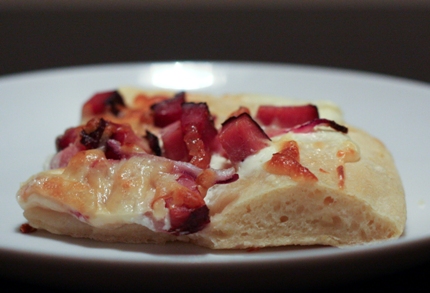
“Oven-baked lángos !” When I first saw the sign at the Budapest Christmas fair years ago, I was puzzled. What is lángos
about if not deep-fried greasy goodness? But judging from the crowds
gathered around the stand, where a clay oven was stoked with wood and
slabs of speckled dough were rotated in to bake over the coals, there
must be something worthy of attention.
| |
Toki pompos (pão de batata) hungaro 2 receitas
Toki pompos 01 (pão de batata) hungaro Ingredientes:
Preparação:
O fermento no leite morno com açúcar felfuttatjuk. O ninho é preparada de farinha, coloque as batatas cozidas em puré, fermento, óleo, sal a gosto. Massa elástica é preparada com água quente, exercite-se bem.
Deixe crescer em lugar quente por duas vezes, e depois levemente deslocar kiolajozott fazemos e aprox. 1 a 1,5 cm de espessura são fornecidos. Asse a 200 graus por aprox. 8-10 minutos. Os pompos semi-acabados removido, o top 1 colher de sopa de farinha de trigo e creme de leite misturado com propagação de alho ralado e polvilhe com a cebola cortada vermelha, bacon picado e queijo grosseiramente ralado. O megdíszített pompos de volta para a aprox forno, e. Leve ao forno por mais 5 minutos, até que o pão é cozido massa pronta, e megpirul topo. | |
Toki pompos 02Ingredientes:
Preparação:
As batatas cozinham, rompendo e adicione o fermento misturado com a farinha. Talvez o főzőlevét batata utilizada para a construção. Seja apenas um pouco, adicione um pouco de sal. Uma lata que oferecem horas após a emergência assado metade,.
Retirado do forno, e já foi encontrado no alho, leite triturados,
misturados com uma escova de bacon picado (não sentir pena de a
matéria-prima), polvilhe com cebola roxa picada laskára, em seguida,
retornou ao forno por aprox. 10 minutos. No final da cozedura polvilhe com o queijo ralado. Cserszegi tempero melhor para ele.
Nota: | |

 óleo
óleo 

quarta-feira, 18 de abril de 2012
See You Later, Pizza, This Dough Is for Calzones
See You Later, Pizza, This Dough Is for Calzones
By MELISSA CLARK

MAYBE it’s the suggestive power of the name, but rarely do I use pizza dough for anything else, even though it’s perfectly suitable for savory tarts, flatbreads and rolls. Once I get pizza on the brain, it’s hard to redirect. Then I got reacquainted with an old friend also made from that same dough: the calzone.
Though it was a childhood staple at my corner pizzeria, I hadn’t eaten a calzone in years. But at a dinner at Lucali in Carroll Gardens, Brooklyn, I saw one emerge from the oven, a burnished, puffy crescent oozing ricotta at the seams. On the side was a small bowl of tomato sauce for dunking, garnished with a few fresh basil leaves. It was a much classier presentation than the oil-stained paper plate I would use to transport my calzones of yore, and it tasted better, too.
I was inspired. It was time to revisit the calzone at home.
After all, a calzone has many of the perks of pizza. Easy and crowd pleasing, it’s a good vehicle for using up odds and ends in the fridge.
It also has some happy benefits of its own. For one, you can get away with adding a lot more cheese. In fact, it’s practically mandatory. You need to stuff enough ricotta and mozzarella into the dough so that it ripples attractively, rising as it bakes. Unlike an apple turnover, which wants to stay flat, a calzone should peak and singe at the top. (True, you could cram the dough full of vegetables and the like, but if you love cheese, calzones are the place to indulge.)
Another calzone advantage is the element of surprise. Pizza gives it all up as soon as it lands on the table; serve a calzone to a group and let them anticipate the moment when they find out what’s inside.
The surprises continue even after the big reveal. A calzone unveils itself slowly, bite by bite, especially if you’ve layered the fillings with several elements, like sautéed broccoli rabe, olives and three kinds of cheese.
That was the first calzone I made after my Lucali meal, and the recipe is a good template for a calzone of the cheesiest kind. You can vary the vegetable, substituting roasted red peppers, halved cherry tomatoes, grilled onions or ramps, sautéed raw mushrooms or steamed kale for the rabe. Or leave vegetables out altogether. Hate olives? Skip them or combine with anchovies or capers to increase the salt factor.
Pork products are also particularly calzone-friendly. Adding savory bits of ham, sausage or seared pancetta or bacon will bulk up and fortify the meal.
For the dairy eschewers in my life, I whipped up a calzone without any cheese at all. Instead, I piled garlicky mashed white beans and caramelized fennel and onions into pizza dough, baking it until golden. It was full-flavored and soft-centered, not a traditional calzone but a delicious tart-like creation unto itself, and one that I’ll make again.
Taking a cue from Lucali’s Nutella-drizzled calzone, I even attempted my own dessert version. I mixed honey, cinnamon and orange zest into ricotta before filling the pizza dough (the same one used for the savory calzone), then I dusted the top with powdered sugar after baking. A sprinkle of sea salt lent a savory contrast to this most sweet endeavor.
And finally, for those who can’t give up the pie, I offer a pizza-calzone hybrid. Based on an elaborate dish I sampled at Don Antonio by Starita, a Midtown pizzeria, it has basil-perfumed ricotta and Parmesan in the center, and tomato sauce and melted mozzarella on top. It’s the best of both worlds, and an unexpected thing to do with a ball of pizza dough.
domingo, 15 de abril de 2012
Matzo is more than just Jewish flatbread
Matzo is more than just Jewish flatbread
Posted April 3, 2012 (2 weeks ago) at 10:12 pm in Columns, Lifestyle
 (No Ratings Yet)
The appeal of unleavened bread might be limited. At least that’s how the food would sound to anyone unfamiliar with the thin, cracker-like matzo, a Jewish dietary staple that makes a resurgence with the arrival of Passover this time of year.
The common explanation for matzo’s origins is that Israelites had little time to flee Egypt during their Biblical exodus, resulting in bread that had to be flattened and quickly baked. Matzo is thereby eaten as a form of symbolic remembrance at Passover.
But for those of you not observing the holiday, or who choose not to keep kosher, the question becomes this: If you don’t have to eat matzo, why eat it?
Answer? The crunch. The wide surface that takes well to spreads. The random bits of baked flavor. These are reasons to embrace matzo.
Another vital reason is its versatility.
Bon Appétit, The New York Times and Martha Stewart Living have all recommended ways to diversify the Seder, the traditional Passover meal. And all have provided funky new recipes introducing flavors like rosemary and olive oil to toasted matzo.
Then there are matzo balls. I’ve written previously about The Gorbals’ bacon-wrapped matzo balls andLukshon’s silky, Asian-inflected matzo ball soup. The writer-historian Marcie Cohen Ferris even wrote the definitive book on Jewish Southern food, Matzoh Ball Gumbo. The title recipe incorporates a spicy Creole seasoning into the matzo balls — just another example of how easy it is to improvise, personalize and regionalize a recipe.
But for the traditionalist, the standby matzo recipes still hold strong. However, you must keep in mind that the best matzo — crumbly and buttery with dark, popped bubbles throughout — is prepackaged.
There are plenty of ways to try matzo, both new and old: An open-faced matzo sandwich is like having a bread’s crust without the doughy center. And for those that prefer this crunch, matzo becomes a worthy substitute.
Spreading some grainy mustard on a piece and topping it with some slices of pastrami and a pickled tomato is the stuff of deli dreams.
Keep in mind that Langer’s Delicatessen has the best pastrami, a widely acknowledged fact cemented by a prestigious James Beard award. Langer’s is only three miles from campus, a distance justified as walkable if you’ve ever tasted its “Number 19” sandwich, which flaunts hot slices of pastrami piled high with slaw, cheese and Russian dressing.
Another favorite is Hershey’s-dipped matzo, in which pieces of the unleavened bread are dipped in melted chocolate and left in the freezer until ready for consumption.
The combination of the two flavors, along with the once-a-year joy of matzo and the childhood memories of a melted Hershey’s bar, provides the teary-eyed, first-bite delight only the most special foods inspire.
Matzo often serves as a substitute for other ingredients, too.
Oats fall into a kosher gray area, so if you have the matzo, you might as well do good with it. Matzo granola is a cinch to make, and it tastes better toasted in a skillet than baked in an oven, as granola typically is. Here’s how to make it:
1. Lather a square of matzo with canola oil, sprinkle lightly with salt and generously with sugar and cinnamon.
2. Break over a hot skillet and let cook at medium heat until the sugar has glazed the matzo, and the edges of many pieces turn black, roughly four to six minutes.
3. To finish, add some chopped cinnamon almonds, like those available at Fresh & Easy and some golden raisins.
Finally, there’s matzo brei. Matzo brei gives texture to eggs and a pleasant dampness to matzo, creating a sort of free-form French toast. The recipe — my family’s — is as follows:
1. Break three squares of matzo into uneven, bite-size pieces and soak in warm water for about one minute until wet but not saturated.
2. Take matzo out of water and drain in colander to get the excess moisture out.
3. Mix four eggs in a bowl with a splash of milk until frothy.
4. Add matzo to egg mixture — mix well but carefully, as to not break up the matzo.
5. Heat skillet on medium heat with a dab of butter, enough to coat the bottom of the pan.
6. Add egg/matzo mixture and cook until tender, about four and a half to five minutes, or until desired doneness. You can treat the mixture much like scrambled eggs.
7. Season with salt and sugar or a cinnamon-sugar combination. A side of applesauce is also recommended.
Though using just egg whites is a healthier alternative than including the yolk, the matzo brei will lack significantly in flavor. Texture is important too — the dish is about the doneness of the matzo and wetness of the eggs. You should be appreciating chewiness in one bite, and savoring crisp, burnt pieces the next.
There’s always Langer’s, Nate ‘n Al’s, Canter’s or Barney Greengrass to get your matzo-dish fix too. But when it comes to this kind of comforting Jewish soul food, your own efforts in the kitchen should suffice.
Bernard Leed is a junior majoring in narrative studies. His column “Amuse-Bouche” runs Wednesdays.
quinta-feira, 26 de janeiro de 2012
Lefse
Lefse
From Wikipedia, the free encyclopedia


Lefse is a traditional soft, Norwegian flatbread . Lefse is made out of potato , milk or cream (or sometimes lard ) and flour , and cooked on a griddle . Special tools are available for lefse baking, including long wooden turning sticks and special rolling pins with deep grooves.
Contents[hide] |
[edit ] Flavoring

There are many ways of flavoring lefse. The most common is adding butter to the lefse and rolling it up. In Norway, this is known as "lefse-klenning". Other options include adding cinnamon and/or sugar, or spreading jelly or lingonberries upon it. Scandinavian -Americanvariations include rolling it with a thin layer of peanut butter and sugar, with butter and white orbrown sugar , with butter and corn syrup, or with ham and eggs. Also quite good with beef, and other savory items, it is comparable to a thin tortilla. Lefse is a traditional accompaniment to lutefisk , and the fish is often rolled up in the lefse.
[edit ] Variations

There are significant regional variations in Norway in the way lefse is made and eaten, but it generally resembles a flatbread, although in many parts of Norway, especially Valdres, it is far thinner.
Tynnlefse (thin lefse) is a variation made in central Norway . Tynnlefse is rolled up with butter ,sugar and cinnamon (or with butter and brown sugar). Tjukklefse or tykklefse (thick lefse) is thicker and often served with coffee as a cake.
Potetlefse (potato lefse) is often used in place of a hot-dog bun and can be used to roll upsausages . This is also known as pølse med lompe in Norway , lompe being the "smaller-cousin" of the potato lefse.
Møsbrømlefse is a variation common to Salten district in Nordland in North Norway. Møsbrømmen consists of half water and half the cheese smooth with flour or corn flour to a half thick sauce that greased the cooled lefse. Lefse is ready when møsbrømmen is warm and the butter is melted.[1]
[edit ] Hardangerlefse

Another variety, the Hardangerlefse (from Hardanger in Norway) is made from yeast risenGraham flour or a fine ground whole wheat flour (krotekaker ). The dough is rolled with a conventional rolling pin (and much more flour) until it is thin and does not stick to the surface. It is then cut with a grooved rolling pin in perpendicular directions, cutting a grid into the dough which prevents it from creating air pockets as it cooks. The grid cut can also aid in thinner rolling of the lefse, as the ridges help preserve structural integrity. The lefse is cooked at high temperature (400 °F or 205 °C) until browned, and then left to dry. It can also be freeze dried by repeatedly freezing and thawing.
Dried Hardangerlefse can be stored without refrigeration for six months or more, so long as it is kept dry. It is customarily thought that the bread (along with solefisk ) was a staple on the seagoing voyages as far back as Viking times .
The wet lefse is dipped in water, and then placed within a towel which has also been dipped in water and wrung out. Many people maintain that dipping in salted or seawater enhances the flavor. The dry lefse regains its bread-like texture in about 60 minutes. Often that time is used to prepare ingredients such as eggs or herring which are wrapped in the lefse once it has softened.
[edit ] Lefse in the United States
Lefse is a Scandinavian treat that is especially popular around the holidays. ManyScandinavian-Americans eat lefse primarily around Thanksgiving and Christmas . Family members often gather to cook lefse as a group effort because the process is more enjoyable as a traditional holiday activity. This gathering also provides training to younger generations keeping the tradition alive.
The town of Starbuck, Minnesota is the home of the world's largest lefse. In some parts of the United States, including Minnesota , North Dakota , South Dakota , Iowa , Wisconsin , Oregonand Washington , lefse is available in grocery stores. Norsland Lefse, a factory in Rushford, Minnesota , produces about a half million rounds of lefse each year.[2][3][4]
[edit ] Lefse Celebrations and Festivals
Lefse is celebrated in cities and towns with large Scandinavian populations. Fargo, North Dakota hosts the wildly popular Lobster and Lefse Festival in August each year. Fosston, Minnesota invites area lefse makers to compete for the title of Champion Lefse Maker at its Lefse Fest in November.[5][6]
[edit ] See also
[edit ] References
[edit ] Other sources
- Legwold, Gary (1991) The Last Word on Lefse (Adventure Publication) ISBN 978-0934860789
- Ojakangas, Beatrice (1999) The Great Scandinavian Baking Book (Univ Of Minnesota Press) ISBN 978-0816634965
[edit ] External links
 | Wikimedia Commons has media related to: Lefse |
Assinar:
Postagens (Atom)